
Ductal Stenting
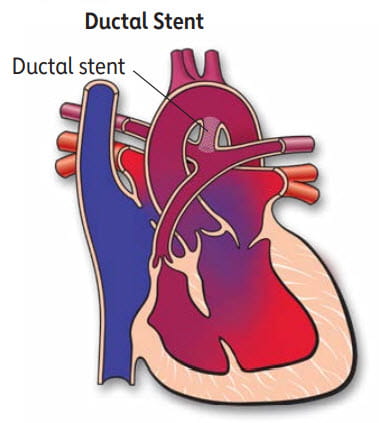
Ductal stenting is a life-saving procedure used to maintain the patency of the ductus arteriosus, a fetal blood vessel that normally closes after birth. This procedure is crucial for newborns with duct-dependent congenital heart diseases, where the ductus arteriosus must remain open to ensure adequate blood circulation.
Procedure:
- A catheter is inserted through a blood vessel, typically in the groin.
- A stent (a tiny metal mesh tube) is placed inside the ductus arteriosus to keep it open.
- This allows oxygen-rich blood to continue circulating while awaiting further treatment or surgery.
Benefits:
- Avoids the need for early major surgery.
- Ensures stable blood flow in infants with complex heart defects.
- Acts as a bridge to definitive treatment or surgical correction.